The Office That Stays Sharp at 5 p.m.
The eight‑hour habit we forget

We spend eight hours a day at work, sometimes more. Meetings, deadlines, coffee breaks, deep-work hours. Meanwhile, outdoor PM2.5 quietly slips indoors through windows, doors, ventilation gaps, and tiny cracks in the building envelope. In shared rooms, everyone’s breaths mix into the same air.
By 5 p.m., the signs often show: heavier focus, slower thinking, and that familiar afternoon dip. Research is clear, outdoor particles don’t stay outside. They follow us in through every opening.
Yet the air we breathe for eight hours at work is almost never part of the conversation.
Why office air shapes how work feels

During meetings and deep work, we’re breathing continuously in a shared room. Movement stirs settled particles; outdoor PM2.5 can slip indoors. None of this means the office is “bad.” It means the room matters and small decisions change how it feels to think, talk, and produce inside it.
Standard day, real difference

You don’t need a crisis to feel it. Without a plan, open areas and meeting rooms can mirror a large share of outdoor PM2.5 and feel stale by 5 p.m. Research on office workers shows that small increases in indoor PM2.5 are linked to slower response times and lower accuracy on everyday tasks, the exact performance you need late in the day.
What better air unlocks for teams

- Clearer thinking. In a multicountry study of office workers, higher PM2.5 was associated with slower responses and reduced accuracy on common cognitive tasks.
- Energy that lasts. Short-term PM2.5 exposure has been shown to impair executive function within hours, exactly when late-day workshops and decisions happen.
- Calmer meetings. When rooms feel healthy (i.e., lower particle load), attention holds and discussions flow. Recent lab and field work adds to evidence that brief particulate exposure can dent higher-order functions important for everyday tasks.
The Clean‑Air Office Playbook
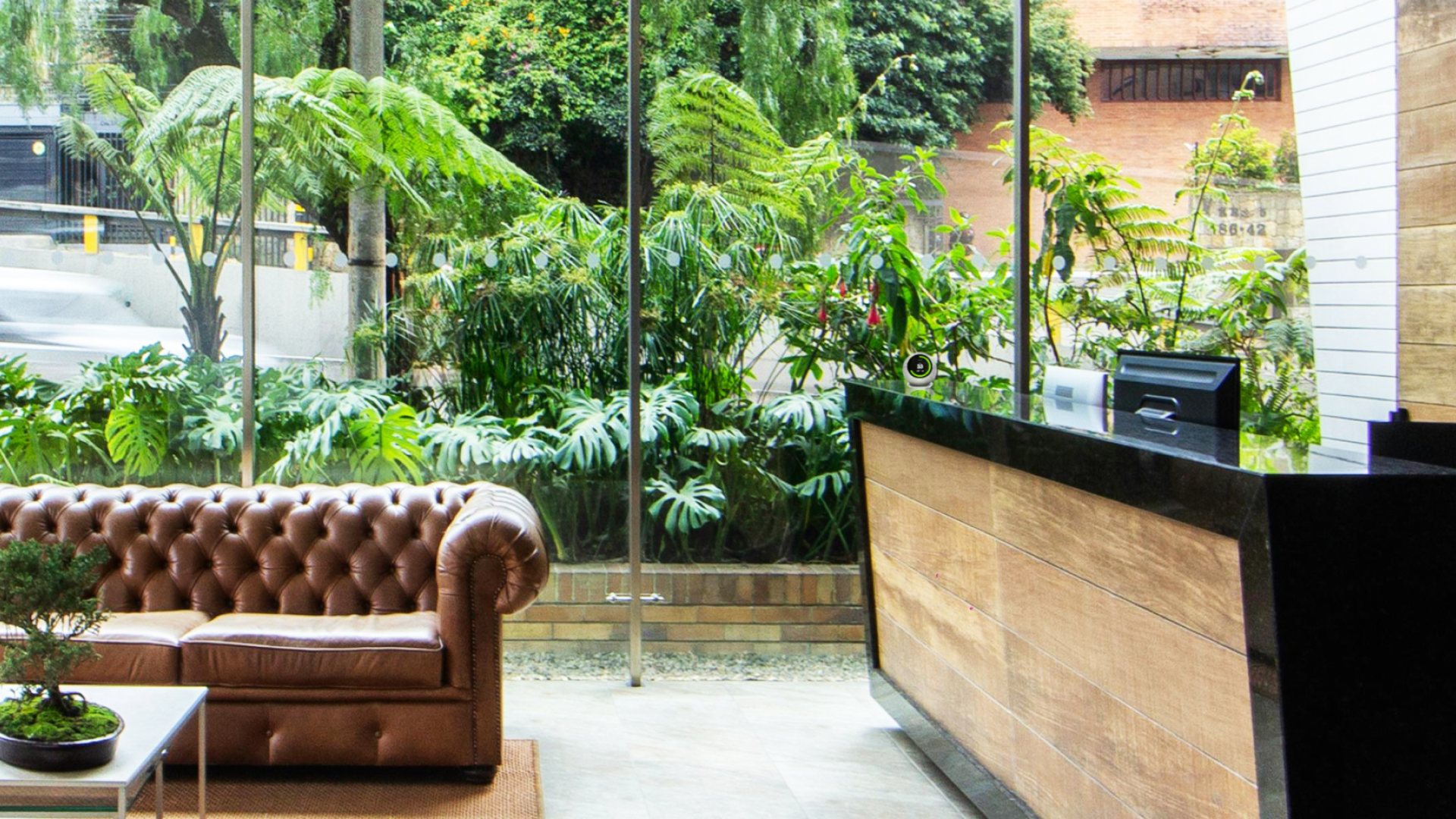
- Make it visible. Put PM2.5 on a simple dashboard and a small display in reception/meeting rooms so everyone understands today’s baseline.
- Right-size filtration. Use HEPA units near breathing zones (desks, meeting rooms); distribute them across the floor; keep a filter-change schedule.
- Vent smart. When outdoor PM2.5 is lower than indoors, open briefly for an air-reset; during outdoor spikes, keep windows closed and rely on filtration. (Yes, outdoor particles infiltrate indoors, visibility helps you time resets.)
- Plan for busy hours. Stagger big meetings, cap small-room occupancy, and give rooms short air-flush breaks between sessions.
- Mind sources. Prefer low-dust/low-VOC cleaning and furnishings; manage printers/toners; keep floors and soft materials dust-aware.
- Build the habit. Make Good Air part of onboarding and office tours: where PM2.5 is displayed, how rooms are managed, and how to report issues.
For teams and individuals

- Book CAZ rooms for long workshops and strategy sessions.
- If a room feels heavy, take a short “air‑reset” break; switch to a fresher space when possible.
- Keep a Clean Air Zone corner at your desk cluster (compact HEPA unit near breathing height).
- Use the Nafas App to understand the day and the Directory to find offices and meeting spaces that already prioritize Healthy Air.
Reference :
https://pmc.ncbi.nlm.nih.gov/articles/PMC4278446/?utm_source=chatgpt.com
https://pubmed.ncbi.nlm.nih.gov/35330988/
https://www.nature.com/articles/s41467-025-56508-3?utm_source=chatgpt.com
https://www.sciencedirect.com/science/article/pii/S0360132323001051?utm_source=chatgpt.com
https://pmc.ncbi.nlm.nih.gov/articles/PMC4278446/?utm_source=chatgpt.com