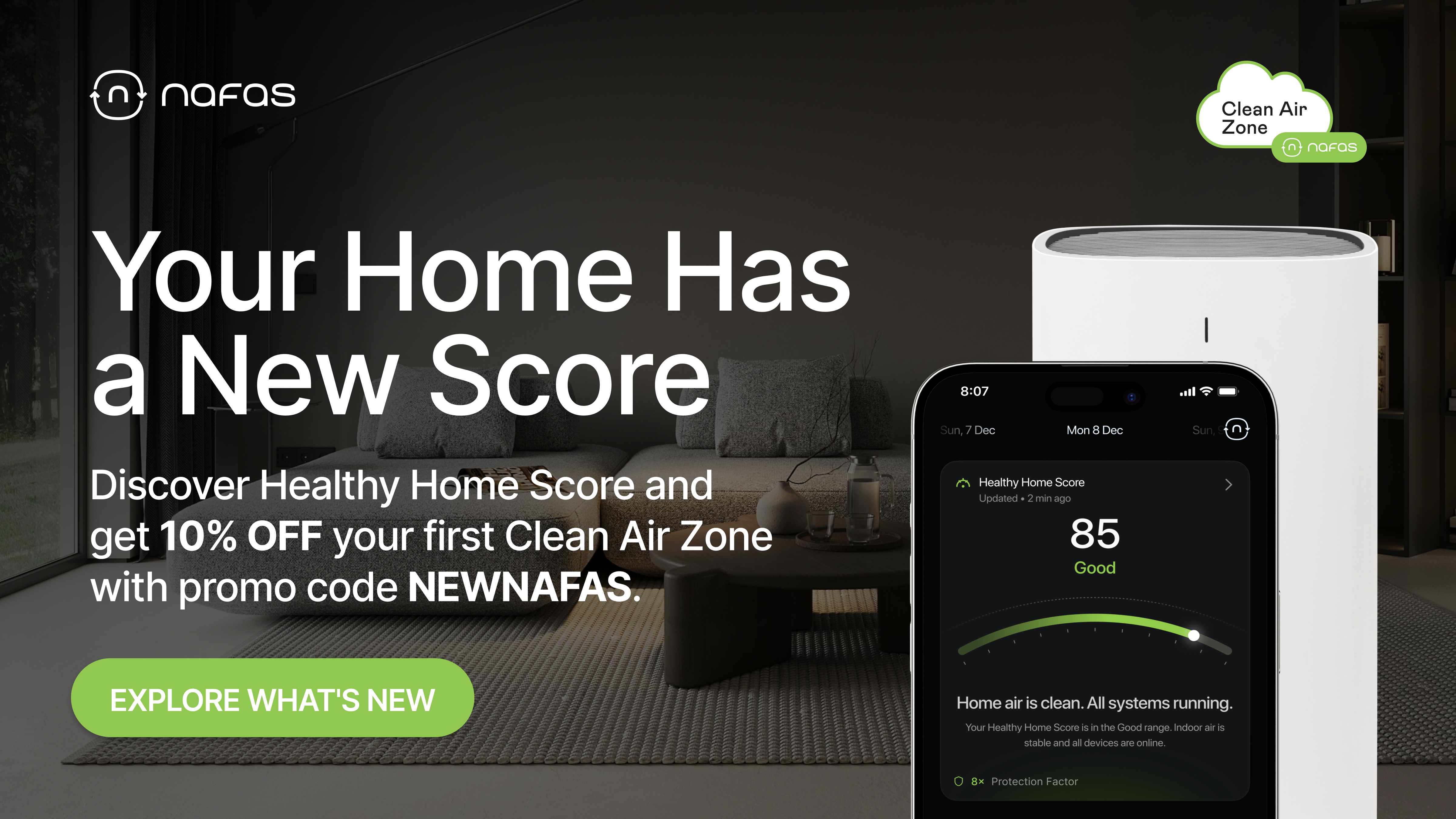
Outdoor AQI helps you understand environmental conditions. Protection Factor helps you understand something even more personal: how effectively your home maintains cleaner air indoors.
Last week, Jakarta's outdoor AQI reached 168. While that number reflects conditions across the city, indoor air quality can vary significantly from one home to another.
Within the Clean Air Zone community, average indoor PM2.5 levels remained much lower, at around 14.
That difference between outdoor and indoor air quality is measured by a metric called Protection Factor.
It's one of the simplest ways to understand how effectively your home is maintaining a healthier indoor environment.
Why Outdoor AQI Alone Isn’t Enough Anymore
Today, many people check outdoor AQI before exercising, commuting, or planning their day.
Outdoor AQI is valuable because it helps us understand air quality conditions around us.
But it doesn't tell us what the air is like inside the spaces where we spend most of our time.
Most people spend the majority of their day indoors, sleeping, working, relaxing, and spending time with family.
Indoor air quality is influenced by many factors, including:
Building design
Ventilation and airflow
Filtration systems
Daily household activities
Outdoor environmental conditions
As a result, two homes in the same neighborhood can have very different indoor air quality.
That's why understanding how your home performs is just as important as understanding outdoor conditions.
What Is Protection Factor?
Protection Factor is a metric in the Nafas app that shows how effectively your home maintains cleaner indoor air compared to the surrounding environment.
Rather than looking only at indoor air quality, Protection Factor compares indoor and outdoor conditions to provide a clearer picture of your home's air quality performance.
The result is displayed as a simple ratio.
For example:
2× Protection Factor → Indoor air is twice as clean as the surrounding outdoor environment.
5× Protection Factor → Indoor air is five times cleaner than the surrounding outdoor environment.
The higher the number, the more effectively your home is maintaining cleaner indoor air.
It answers a simple question:
How much cleaner is the air inside my home?
The Four Factors That Influence Protection Factor
Protection Factor constantly changes throughout the day based on what’s happening both inside and outside your home.
Here are the four biggest factors that influence it:
1. Outdoor Pollution Levels
When outdoor PM2.5 rises, your home needs to work harder to maintain clean indoor air.
Heavy traffic, construction, weather conditions, and seasonal pollution can all affect how much polluted air surrounds your home.
2. Filtration Performance
Your air purification system is one of the biggest drivers of Protection Factor.
HEPA filtration and proper airflow help reduce fine particles before they accumulate indoors. Systems like Clean Air Zone continuously circulate and clean indoor air to maintain healthier conditions.
3. Room Size and Airflow
A device that works well in a bedroom may not be strong enough for a large open living room.
That’s why airflow capacity and room sizing matter. Larger spaces require stronger circulation and filtration to maintain consistent protection.
4. Daily Activities Indoors
Cooking, candles, smoke, cleaning products, and even opening doors frequently can affect indoor air quality.
Protection Factor reflects not only the pollution outside your home, but also what’s happening inside it.
What Does a “Good” Protection Factor Look Like?
A strong Protection Factor indicates that your home is consistently maintaining cleaner indoor air relative to the surrounding environment.
For example, when outdoor particle levels increase, a home with effective air management and filtration can continue maintaining significantly cleaner air indoors.
This is where indoor air systems can make a meaningful difference.
Rather than simply reflecting outdoor conditions, your home can maintain a cleaner, healthier, and more comfortable indoor environment.
For Clean Air Zone users, Protection Factor becomes one of the clearest indicators of how effectively their home's air system is performing.
The Number That Changes How You Think About Air
Most people only track the air outside.
Protection Factor helps you understand something more important: how much of that pollution actually reaches you indoors.
Because healthier living is not only about knowing outdoor AQI.
It’s about understanding how well your home protects the air you breathe every day.
Open the Nafas app to check your Protection Factor and see how your home is performing today.