LEARN / ARTICLE
Healthy Air at Home: Why It Matters and How You Can Improve It
Wellness at home isn’t only about what’s on your plate or how much you move, it's also in the air you breathe. Good air helps you rest better, focus more clearly, and wake up feeling refreshed. Especially in cities where outdoor air is often polluted, the air inside your home deserves equal attention.
How outdoor air and indoor sources shape home air
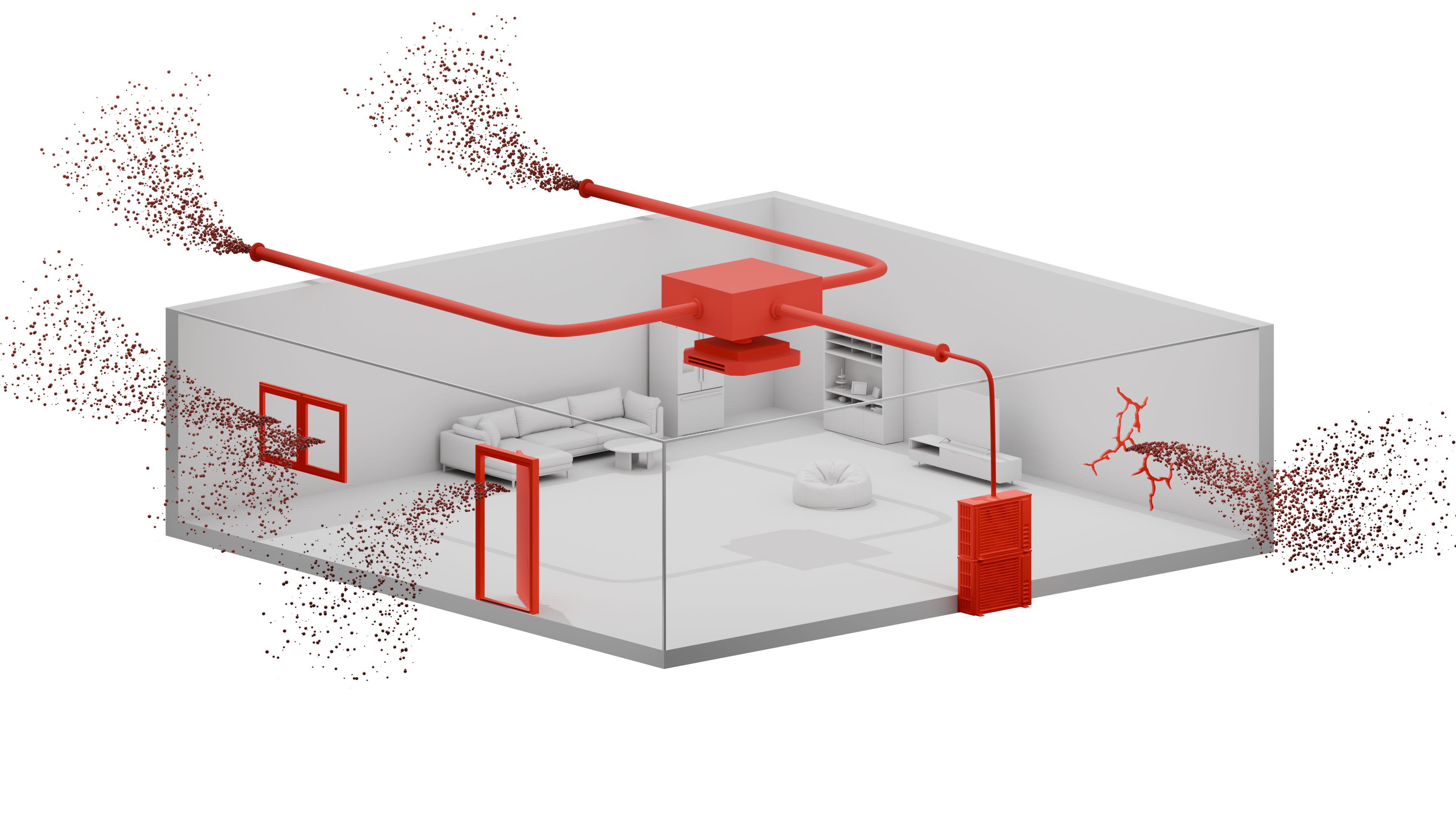
Large, paired indoor–outdoor sensor studies show that a big share of the PM2.5 inside homes comes from outdoors. Particles slip in through small gaps, open windows, and building envelopes. The indoor/outdoor relationship changes with building tightness, weather, and everyday habits, but the pattern is consistent: outdoor fine particles often set the baseline for what we breathe indoors.
Why this matters on bad-air days
When outdoor air is good, the indoor baseline tends to be low. But on polluted days, the baseline rises, even if you stay inside. Without protection, indoor air tracks outdoor spikes with a bit of delay and damping. That’s why a room can feel “heavy” after a citywide spike: the background level inside has quietly crept up.
What Good Air unlocks at home
- Steadier energy, clearer headspace. Less particle load supports day-to-day focus and comfort.
- More restful nights. A healthier bedroom baseline means fewer irritants while you sleep.
- Confidence on bad-air days. When the city spikes, your home doesn’t have to.
Know the day.
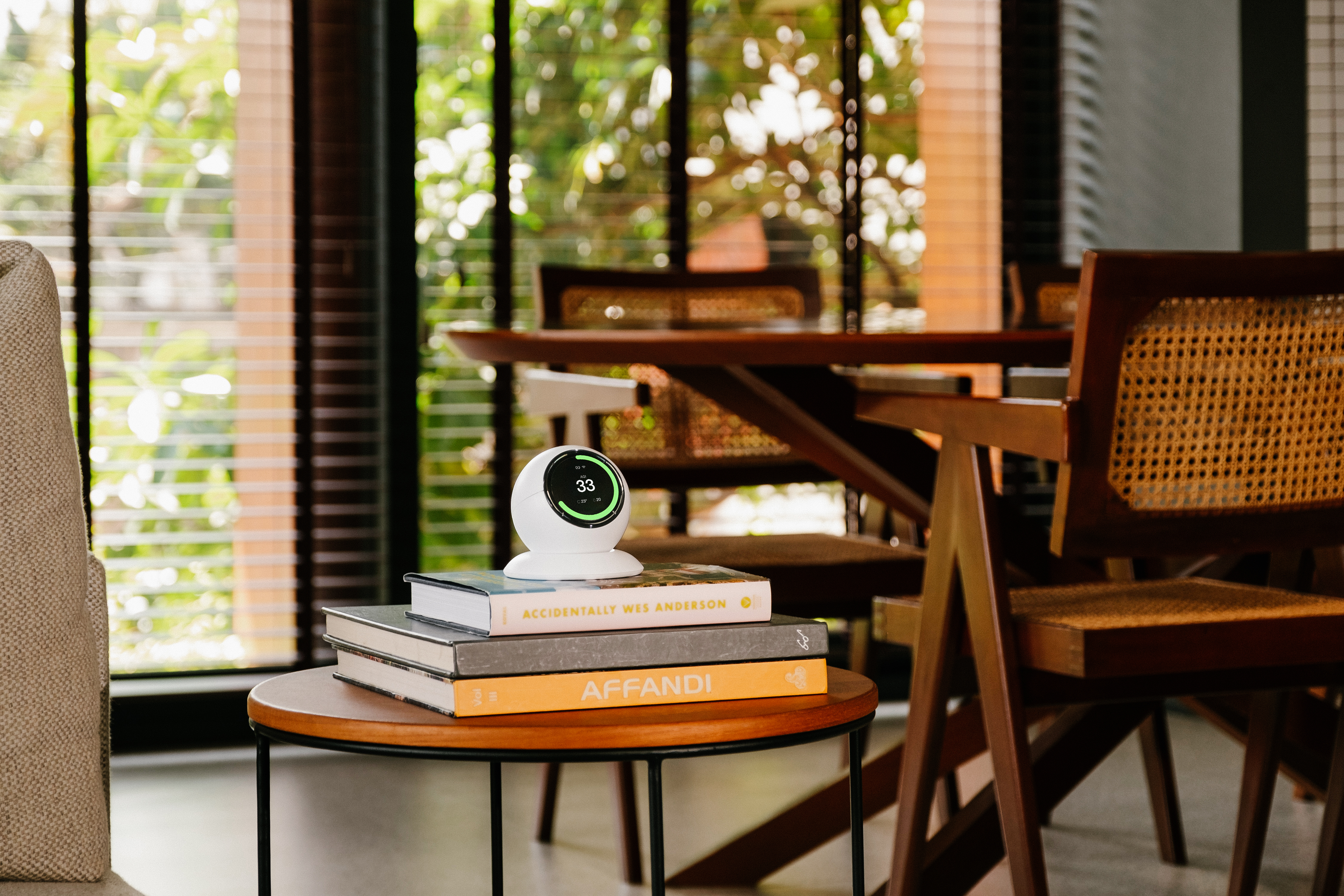
Check PM2.5 each morning in the Nafas app. If today is a Standard Day (>35 µg/m³) or a Really Bad Day (>90 µg/m³), treat your home as a place to reduce exposure from outside air.
Reduce particle entry during spikes.
Close windows and doors when levels rise to cut infiltration. Focus on the rooms you live in most, especially the bedroom.
Right-size filtration, per room you actually use.
Use an air purifier sized for each room (bedrooms, main living area). Keep it on continuously; use Auto/Turbo when outdoor air is bad and Quiet/Night while you sleep. Replace filters on schedule to keep Good Air consistent.
Prioritize the bedroom baseline.
You spend the longest continuous hours there. Keeping the overnight baseline low pays you back the next day.
Glance at the numbers, don’t obsess.
Check outdoor levels in the app and, if available, an indoor display. Aim for steady low indoor readings, even when the city spikes.
A Small Change, A Noticeable Difference
The best part is that healthier indoor air doesn’t require major renovations. It begins with simple, consistent habits: checking air quality, ventilating at the right times, using proper filtration, and maintaining your home’s airflow systems. Over time, these small steps add up, leading to easier breathing, fewer discomforts, more stable mornings, and a home that feels not just cozy, but truly restorative. What you breathe indoors shapes how you feel every single day.
Good air at home can transform how you feel throughout the day. When your bedroom air is healthier, you sleep more deeply and wake up better rested, with fewer disruptions through the night. Lower particle levels also create a more comfortable environment for everyone, especially children and older family members, reducing irritations and helping improve focus. And when your indoor air is well-managed, mornings feel calmer and outdoor pollution becomes less overwhelming because your body starts the day with a cleaner baseline.
Reference :
Lunderberg, D. M., Liang, Y., Singer, B. C., Apte, J. S., Nazaroff, W. W., & Goldstein, A. H. (2023). Assessing residential PM2.5 concentrations and infiltration factors with high spatiotemporal resolution using crowdsourced sensors. Proceedings of the National Academy of Sciences, 120, e2308832120.
https://doi.org/10.1073/pnas.2308832120
Hattori, S., Iwamatsu, T., Miura, T., Tsutsumi, F., & Tanaka, N. (2022). Investigation of indoor air quality in residential buildings by measuring CO₂ concentration and a questionnaire survey. Sensors, 22(19), 7331.https://doi.org/10.3390/s22197331
Pikmann, J., et al. (2024). Particulate emissions from cooking. Atmospheric Chemistry and Physics, 24, 12295–12321.https://doi.org/10.5194/acp-24-12295-2024
Tang, R., Sahu, R., Su, Y., et al. (2024). Impact of cooking methods on indoor air quality: A comparative study of particulate matter (PM) and volatile organic compound (VOC) emissions.Journal of Environmental and Public Health, 2024, 6355613.
https://doi.org/10.1155/2024/6355613
Akteruzzaman, M., Rahman, M. A., Rabbi, F. M., Asharof, S., Rofi, M. M., Hasan, M. K., & Rahaman, M. H. (2023). The impacts of cooking and indoor air quality assessment in the southwestern region of Bangladesh. Heliyon, 9, e12852. https://doi.org/10.1016/j.heliyon.2023.e12852