LEARN / ARTICLE
The Future of Learning Starts with Healthy Air: Here’s How ISMILE Schools Are Making It Happen
As Jakarta and many other Indonesian cities continue to experience high levels of air pollution, schools are looking for ways to better understand and manage the air their students breathe.
At ISMILE Family of Schools, that starts with measurement.
ISMILE and ISHINE have partnered with Clean Air Zone by Nafas as their air quality partner across six schools in Permata Hijau, Menteng, Kelapa Gading, Pantai Indah Kapuk, Pangeran Antasari and Bandung.
Through this partnership, the schools have access to a comprehensive approach to indoor air quality management – from monitoring and reporting to clean air solutions and parent-focused education. The goal is to help schools better understand their indoor environment and take informed action to support healthier spaces for children to learn, play and grow.
What the data shows
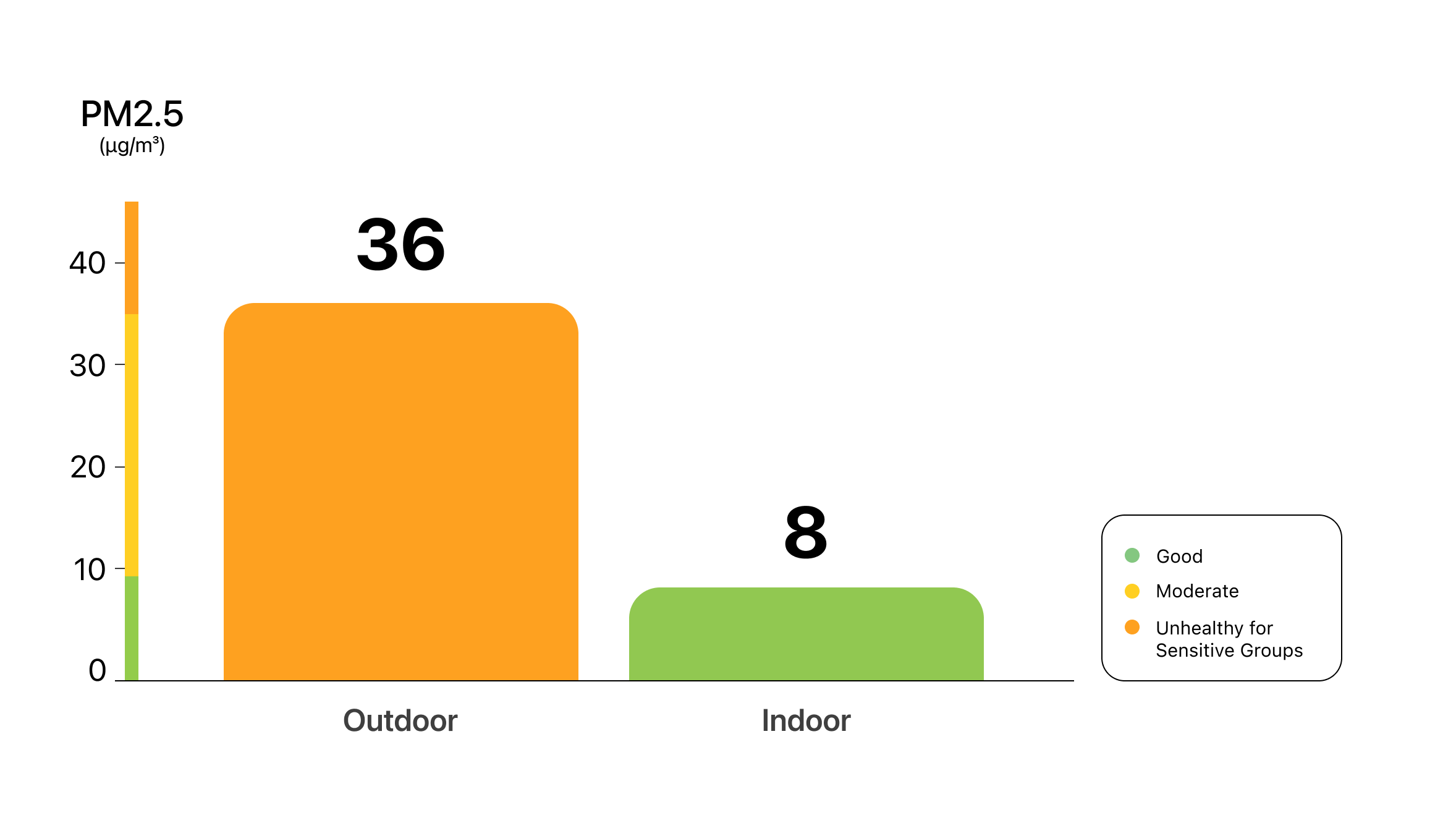
In August 2025, combined data from the ISMILE schools showed an average outdoor PM2.5 concentration of 36 µg/m³.
PM2.5 refers to fine particulate matter small enough to penetrate deep into the respiratory system. Exposure to PM2.5 is associated with a range of health effects, including respiratory and cardiovascular disease. The World Health Organization recommends a 24-hour average PM2.5 level of no more than 15 µg/m³.
Inside the schools, however, the average PM2.5 concentration was 8 µg/m³ – approximately 78% lower than the outdoor concentration.
That difference is significant. It shows how indoor environments can have substantially different air quality from the air outside and highlights the value of measuring indoor air quality rather than relying on outdoor conditions alone.
With more than 800 students across the ISMILE Family of Schools, managing the indoor environment is an important part of creating spaces where children can learn, play and develop.
From measurement to action
Good indoor air quality starts with knowing what's in the air.
Monitoring can help schools identify changes in air quality, understand patterns over time and evaluate whether measures taken to improve indoor air quality are having the intended effect.
This is where Clean Air Zone by Nafas plays a role.
Through real-time indoor air quality monitoring, data analytics and air quality management solutions, Clean Air Zone helps schools understand what's happening in their indoor environments and identify opportunities to improve them.
For schools, this creates an opportunity to make indoor air quality a measurable part of the learning environment – alongside the many other factors that contribute to children's wellbeing and development.
Creating healthier learning environments
For ISMILE, the partnership with Nafas is about more than simply measuring air quality. It's about making indoor air quality visible, understandable and actionable across the school community.
By combining real-time data with air quality management and education, schools can take a more informed approach to the environments where children spend much of their day.