
-
For Business
-
For Homes
-
How it works
-
Technology

Enterprise & buildings
Assessment-led. Developers, asset owners, FM, MEP, government, schools, healthcare, hospitality.
Request an assessment
Enterprise & buildings
Assessment-led. Developers, asset owners, FM, MEP, government, schools, healthcare, hospitality.
Hardware
The product line.



For Business
Enterprise & buildings
Assessment-led. Developers, asset owners, FM, MEP, government, schools, healthcare, hospitality.
How it works
Technology
HARDWARE
The product line
Region and Language
You Don't Think About the Air Until You Do.
Antoine de Carbonnel
Watch Video
The Things We Don't Think About
Every home has its routines. The first coffee of the morning.
Shoes left by the door. A favorite chair that everyone ends up sitting in.
Some things quietly become part of everyday life without us ever noticing.
The air is one of them. You don't see it. You don't think about it.
You simply expect it to be there.
For years, that's exactly how Antoine felt.
"Before 2020, I literally never thought about air quality."
It wasn't because he didn't care. It was because, like most of us, he had never been given a reason to. That changed when living in Jakarta made him ask a question he had never asked before.
If this is where my family spends most of our time, what kind of air are we actually breathing?
When Something Invisible Becomes Personal

Like many families, Antoine and his wife spend most of their time indoors with their two young children.
Home is where work happens. Where evenings slow down. Where books are read, meals are shared, and bedtime stories unfold.
"We have two kids... We spend a lot of time indoors.
It's quite hot and quite polluted, so we spend a lot of time indoors."
Like many people, Antoine assumed that being indoors naturally meant breathing healthier air. It felt quieter. Safer. Protected from everything happening outside. Then he started measuring it.
"When I first realized that the air inside was sometimes even worse than outside, I was quite shocked."
That moment changed the conversation. The concern was no longer just the city's pollution. It became about creating a home where his family could breathe healthier air every day.
"As soon as I saw it, I immediately thought about my kids.
How can we improve the air quality as quickly as possible?"
The Numbers Behind the Feeling
Understanding the air didn't make life more complicated. It simply made the invisible visible.
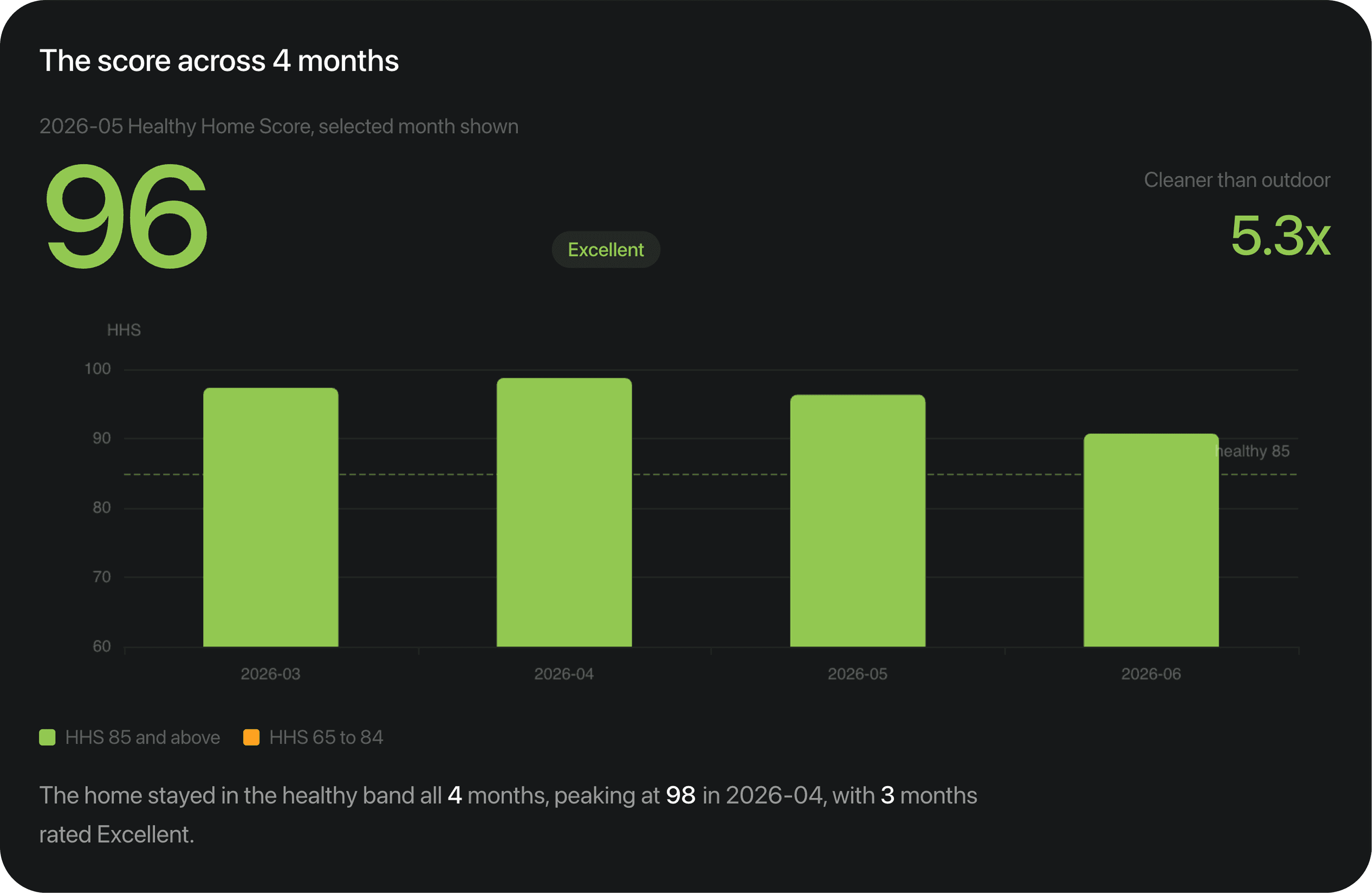
Today, Antoine's home consistently maintains a Healthy Home Score of 96.3, placing it in the Excellent range.
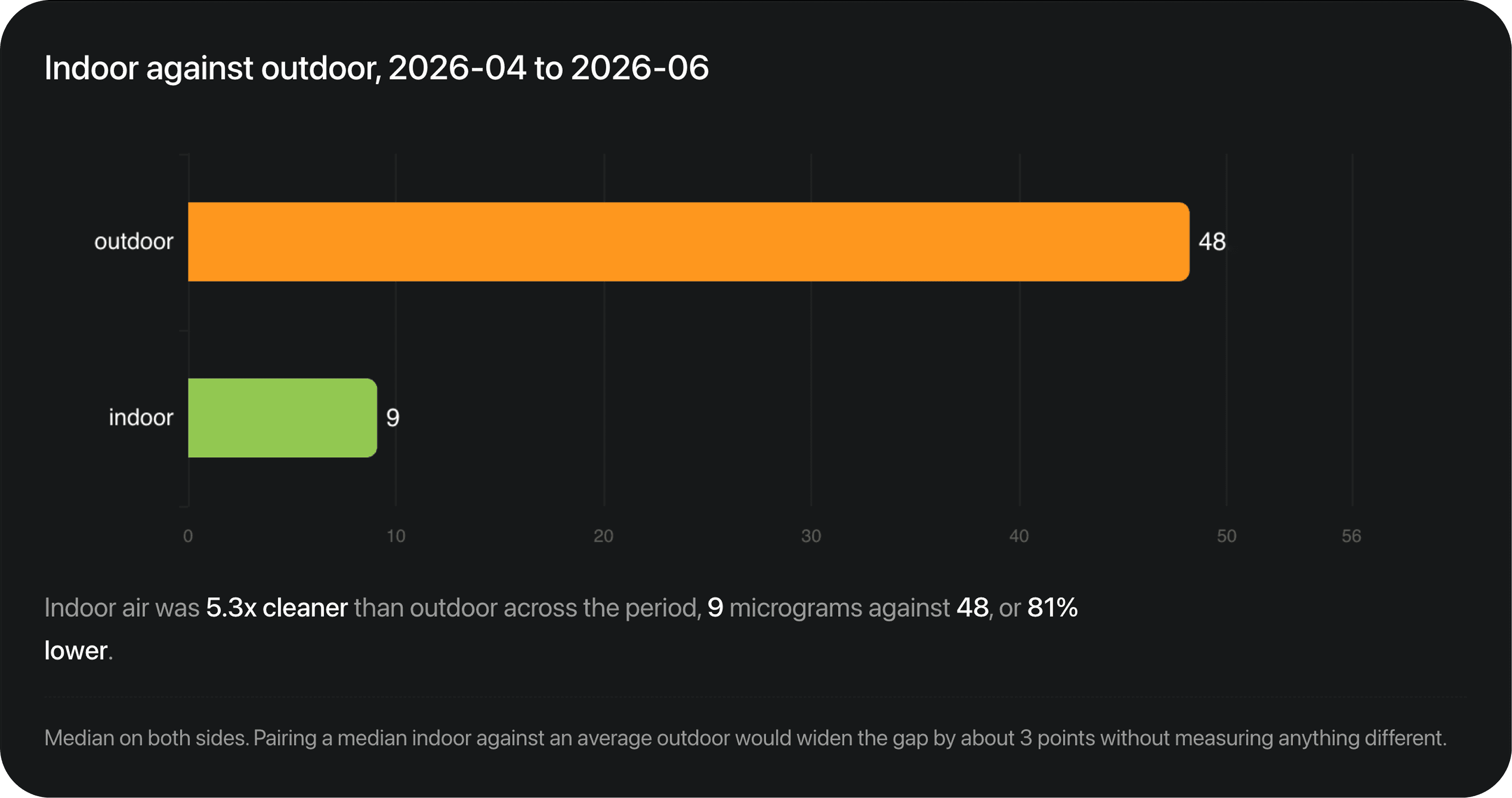
The air inside his home also remains 5.3× healthier than the air outside, with an average indoor PM2.5 level of 9.1 μg/m³.
Instead of wondering whether the air is good enough today, he now has confidence that the place where his family spends the most time is continuously maintaining healthier air.
The Things We Don't Think About
Every home has its routines. The first coffee of the morning.
Shoes left by the door. A favorite chair that everyone ends up sitting in.
Some things quietly become part of everyday life without us ever noticing.
The air is one of them. You don't see it. You don't think about it.
You simply expect it to be there.
For years, that's exactly how Antoine felt.
"Before 2020, I literally never thought about air quality."
It wasn't because he didn't care. It was because, like most of us, he had never been given a reason to. That changed when living in Jakarta made him ask a question he had never asked before.
If this is where my family spends most of our time, what kind of air are we actually breathing?
When Something Invisible Becomes Personal
Like many families, Antoine and his wife spend most of their time indoors with their two young children.
Home is where work happens. Where evenings slow down. Where books are read, meals are shared, and bedtime stories unfold.
"We have two kids... We spend a lot of time indoors.
It's quite hot and quite polluted, so we spend a lot of time indoors."
Like many people, Antoine assumed that being indoors naturally meant breathing healthier air. It felt quieter. Safer. Protected from everything happening outside. Then he started measuring it.
"When I first realized that the air inside was sometimes even worse than outside, I was quite shocked."
That moment changed the conversation. The concern was no longer just the city's pollution. It became about creating a home where his family could breathe healthier air every day.
"As soon as I saw it, I immediately thought about my kids.
How can we improve the air quality as quickly as possible?"
The Numbers Behind the Feeling
Understanding the air didn't make life more complicated. It simply made the invisible visible.
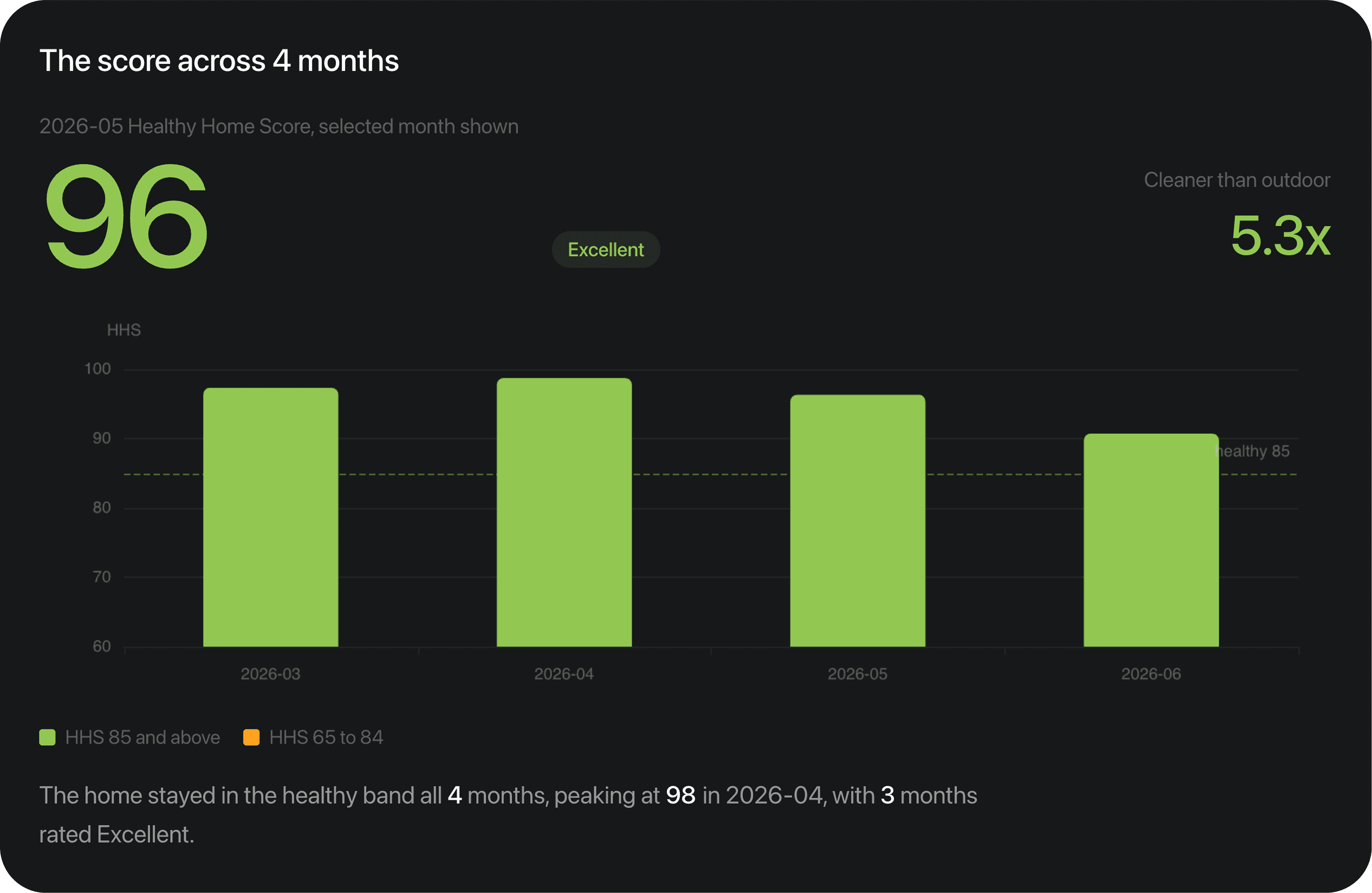
Today, Antoine's home consistently maintains a Healthy Home Score of 96.3, placing it in the Excellent range.
The air inside his home also remains 5.3× healthier than the air outside, with an average indoor PM2.5 level of 9.1 μg/m³.
Instead of wondering whether the air is good enough today, he now has confidence that the place where his family spends the most time is continuously maintaining healthier air.
The Things We Don't Think About
Every home has its routines. The first coffee of the morning. Shoes left by the door. A favorite chair that everyone ends up sitting in.
Some things quietly become part of everyday life without us ever noticing. The air is one of them. You don't see it. You don't think about it. You simply expect it to be there.
For years, that's exactly how Antoine felt.
"Before 2020, I literally never thought about air quality."
It wasn't because he didn't care. It was because, like most of us, he had never been given a reason to. That changed when living in Jakarta made him ask a question he had never asked before.
If this is where my family spends most of our time, what kind of air are we actually breathing?
When Something Invisible Becomes Personal
Like many families, Antoine and his wife spend most of their time indoors with their two young children.
Home is where work happens. Where evenings slow down. Where books are read, meals are shared, and bedtime stories unfold.
"We have two kids... We spend a lot of time indoors. It's quite hot and quite polluted, so we spend a lot of time indoors."
Like many people, Antoine assumed that being indoors naturally meant breathing healthier air. It felt quieter. Safer. Protected from everything happening outside. Then he started measuring it.
"When I first realized that the air inside was sometimes even worse than outside, I was quite shocked."
That moment changed the conversation. The concern was no longer just the city's pollution. It became about creating a home where his family could breathe healthier air every day.
"As soon as I saw it, I immediately thought about my kids. How can we improve the air quality as quickly as possible?"

The Numbers Behind the Feeling
Understanding the air didn't make life more complicated. It simply made the invisible visible.
Today, Antoine's home consistently maintains a Healthy Home Score of 96.3, placing it in the Excellent range.
The air inside his home also remains 5.3× healthier than the air outside, with an average indoor PM2.5 level of 9.1 μg/m³.
Instead of wondering whether the air is good enough today, he now has confidence that the place where his family spends the most time is continuously maintaining healthier air.
A Different Relationship With Home
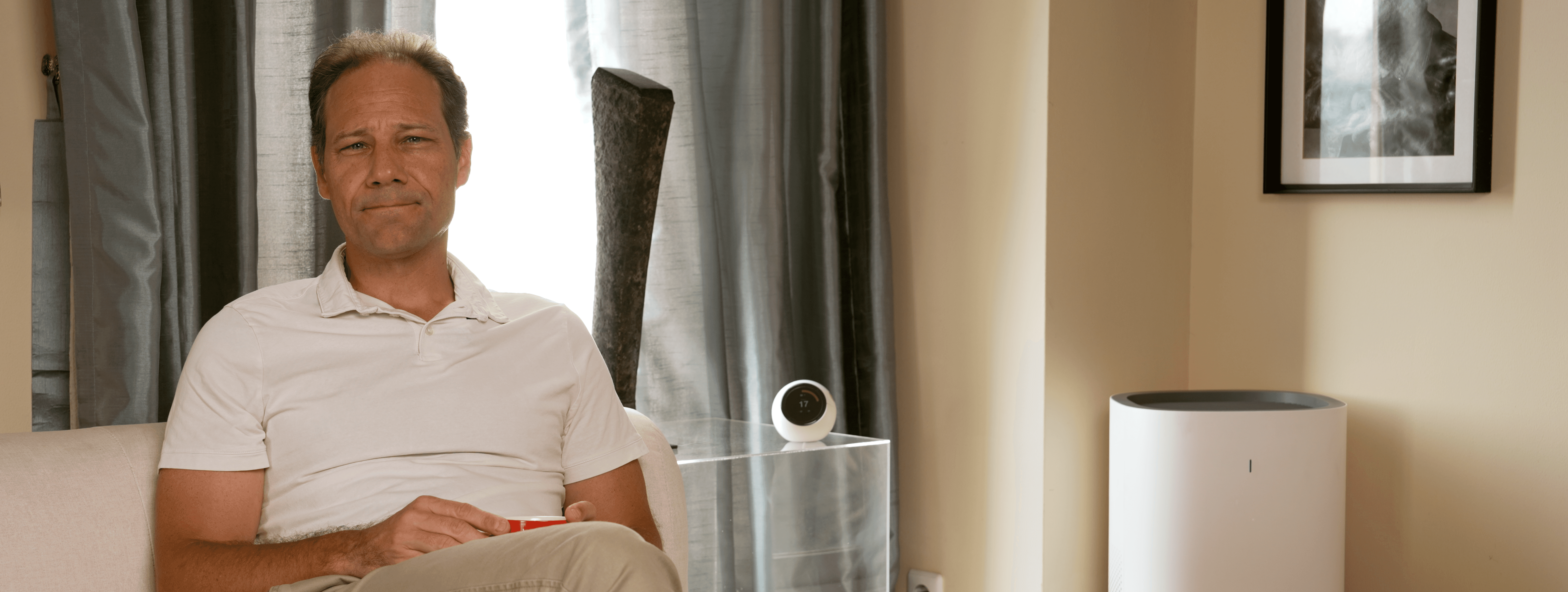
Over time, checking the air became less about curiosity and more about reassurance.
Sometimes it's before heading out for the day.
Sometimes it's checking in while he's at work.
Sometimes it's simply seeing how his home responds to everyday moments, like cooking dinner or opening the front door.
"It became part of my daily routine."
The numbers didn't become another thing to worry about.
They became reassurance.
A quiet reminder that his home was doing what it was supposed to do.
What Peace of Mind Looks Like
The biggest change wasn't the score. It wasn't the app. It wasn't even the technology.
It was knowing that the place where his family spends most of their lives is continuously supporting a healthier home environment.
"Nafas has brought us peace of mind. It makes you feel safe."
Instead of wondering whether the air is okay today, Antoine can focus on everything else that makes a house feel like home. Reading together. Sharing meals. Watching his children grow. Because healthier air isn't something he wants to think about every day.
It's something he wants to trust.
Living With Healthier Air
The air inside Antoine's home is still invisible. But the way he thinks about it has completely changed.
Creating a healthier home wasn't about changing his family's lifestyle. It was about better understanding the place where life already happens.
Today, healthier air has quietly become part of everyday life. And perhaps that's the best outcome of all. Because the best homes don't remind you they're working.
They simply let you get on with living.